 Tiếng Việt
 English
 中文
 日本語
 한국어

Chemicals - TM Grow International Corporation
Average response time: 24H
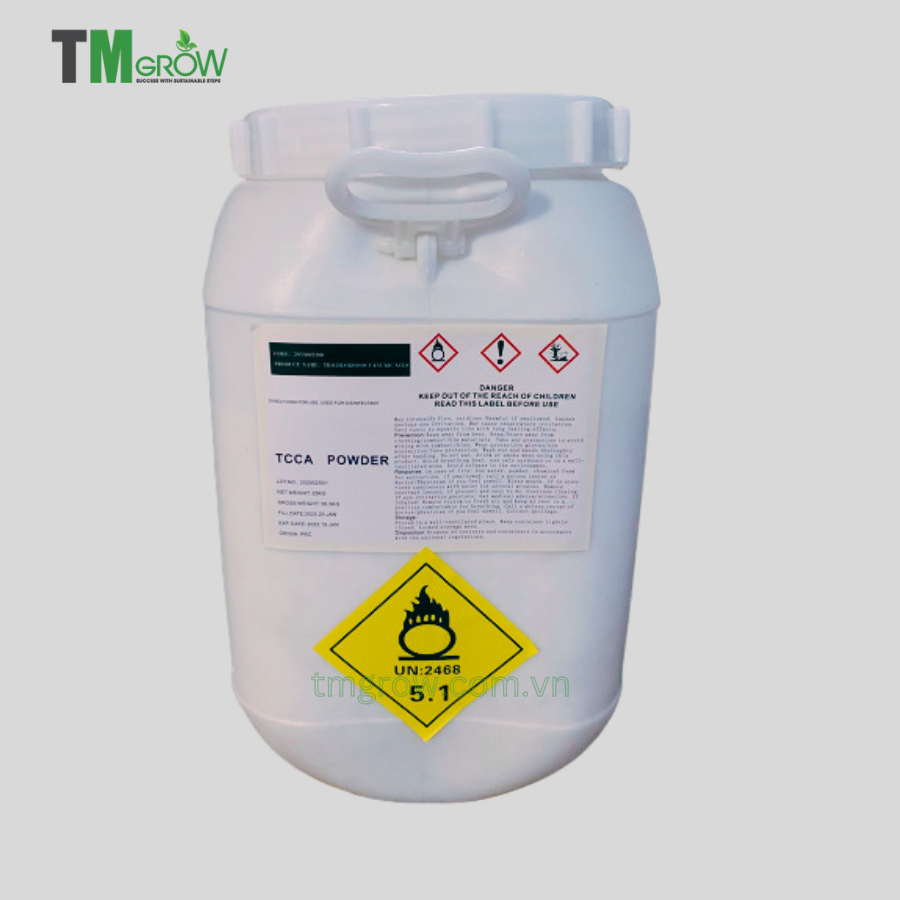
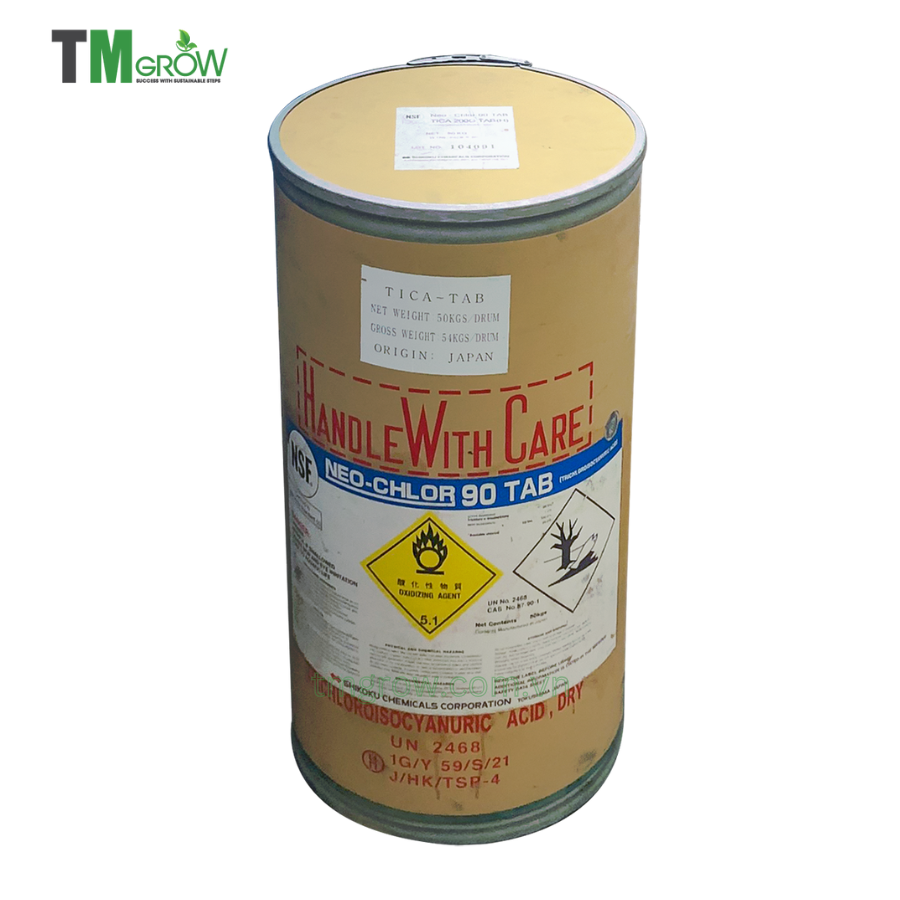
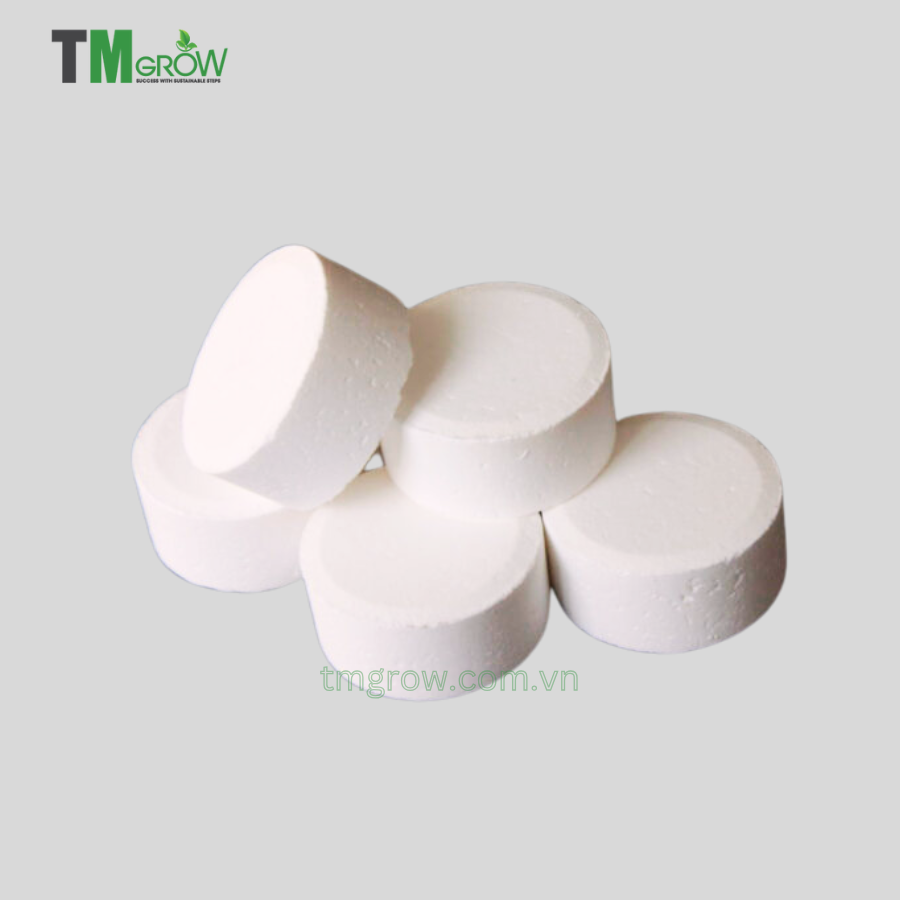
Tricholoroisocyanuric Acid – TCCA
Detailed description
CAS No. or UN No.: 87-90-1
Formula: C3H3N3O3Cl3
Packaging: 50 kg/drum.
Purity: 90%
Origin: China, Japan
Appearance: White powder.
Applications: Eliminates microorganisms, algae, and moss in water. Kills bacteria and pathogenic parasites to prevent diseases in fish and shrimp. Adjusts pH levels in ponds. Treats water prior to shrimp farming to eliminate pathogens. Dosage: 10–20 kg per 1,000 m³ of water.
Pond bottom treatment before stocking:
- Purpose: To eliminate pathogens remaining on the pond bottom from previous crops.
- Dosage: 2–2.5 kg/1,000 m³.
- Method: Allow the pond to dry for 3 days; dissolve the product in water and spray evenly across the pond; after 3–5 days, fill with water and stock with seed.
Water treatment before stocking (two methods):
- Purpose: To eliminate bacteria, pathogens, crustaceans, and trash fish before stocking.
- Dosage: 13–16 kg/1,000 m³ of water (13–16 ppm) when pH is below 7.
- Method: Dissolve the product in water and broadcast evenly across the pond; stock with seed after 7 days.
- Purpose: To clean and disinfect the pond before stocking.
- Dosage: 0.5–1 kg/1,000 m³ of water (0.5–1 ppm).
- Method: Dissolve the product in water and spray evenly across the pond; stock with seed after 7 days. Use in shrimp hatcheries: two application methods
- Purpose: Disinfection; elimination of all bacteria, protozoa, and toxic algae.
- Dosage: 5g per 1 liter of water.
- Application: Dissolve the product in water and spray evenly across the tanks and around the hatchery premises.
- Purpose: Sterilization of the water source used for rearing larvae.
- Equipment disinfection: Mix 1.5g–2g per 10L of water and soak equipment overnight.
Medical use: Sterilization of medical equipment.
Domestic use: Disinfection of domestic water supplies.
Agricultural use: TCCA is used to treat diseases such as rice blast, bacterial leaf blight, and leaf spot. It is used to prevent bacterial contamination of food and to preserve fruits and vegetables. Additionally, TCCA is used for cellulose bleaching.
Storage: Store in a cool, well-ventilated area; keep near a water source to allow for immediate response in the event of a chemical incident.
Safety warnings:
- Eye contact: Immediately rinse with water for 15 minutes and contact the nearest medical center.
- Skin contact: Immediately flush the exposed area with a large amount of water and apply moisturizer to prevent dehydration. Remove contaminated clothing and contact the nearest medical center.
- Inhalation: Move the victim to an area with fresh air. If the victim is not breathing, administer artificial respiration. In severe cases, use supplemental oxygen. Then, contact the nearest medical center.
- Ingestion: Do not induce vomiting unless instructed to do so by medical personnel. If the victim is unconscious, do not put anything into their mouth and contact the nearest medical facility.
Send inquiry to this company

IPAVIETNAM
Hotline/WhatsApp: +84-83-555-3388
WeChat ID: fdivietnam